Want To Let Or
Sell Your Property?
Then get started with a FREE, accurate valuation today.


Considering a move to Solihull?
If so, it’s handy to know the different areas where you may wish to buy or rent a home.
Solihull is highly diverse. In each part, you’ll encounter different price points, character, and amenities – all of which will be explored in this brief overview of the area.
The town centre and its orbiting streets are some of the most refined in the borough, where broad roads display exceptional detached homes. Meanwhile, Shirley presents you with a broader housing stock, lower price points, and an eclectic mixture of streets. On the other hand, if you cast the net wider to Knowle, Dorridge, and the villages of B93, you’ll discover an unassuming, greener market where period cottages are interspersed with executive, detached homes.
Understanding how these zones relate to each other is important, especially if you’re keen to move soon. According to ONS data for February 2026, the average house price in Solihull stood at £328,000, though that figure conceals plenty of variety. For example, the most expensive postcode in the borough tends to be B91, sporting average prices closer to £573,000, while parts of B92 sit comfortably below £300,000. And as always, you can expect street-level prices to vary significantly.
So, let’s explore the different areas that Solihull has to offer. Once done, we hope you’ll feel more equipped to find an area that suits you.
At the very top of the market sits Birch Tree Grove – Solihull’s Hidden cul de sac – crowned the best road in Solihull. Tucked just off Woodside Way, Birch Tree Grove is one of Solihull’s most exclusive and discreet residential locations. Many buyers do not even realise it exists.
This quiet cul de sac offers a collection of substantial, high value homes set within a private and peaceful setting. Properties here rarely come to the open market, with many sales happening off market due to the level of demand and the calibre of buyers targeting this location.
Its position just off Woodside Way places it amongst some of Solihull’s most valuable addresses, where we are now seeing the development of significant, luxury new build homes and large scale redevelopment projects.
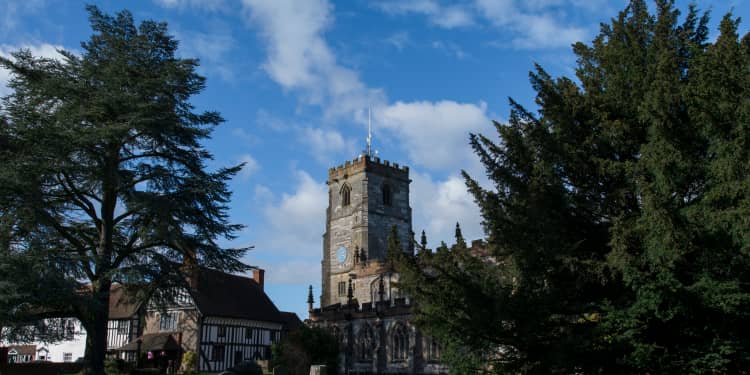
For buyers seeking privacy, prestige and something truly under the radar, Birch Tree Grove stands as one of the finest addresses in Solihull.
Alderbrook Road in B91, which Rightmove data puts at an average of around £2.1m over the past year. Even though there are a small number of transactions, you’ll notice that even the most conservative sales prices hover around the £1m mark. It’s a long, tree-lined avenue with substantial detached homes from the early twentieth century, many of which have been extended or refurbished. The road runs between Solihull town centre and Tudor Grange Park, making it one of the few streets in the borough where buyers can walk to the shops, the station, and open parkland without once getting in the car.
Streetsbrook Road is another name that comes up repeatedly among buyers with larger budgets. Rightmove records an average of around £638,000 along the road, which stretches across both B91 and B90 postcodes. The properties here include interwar detached and semi-detached homes, some extended considerably over the decades, alongside a smaller number of more recently built larger houses. The road is broad, well-planted, and carries relatively little through traffic for a major connecting route — factors that tend to support values over time.
Hampton Lane (B91) runs through an older part of the town close to the centre and carries a good number of substantial pre-war properties, including some with original features still largely intact. The nearness of Solihull School is a point of interest for some families, and competition for the right homes can be acute when supply is limited.
For buyers looking for good value without leaving the premium end of the market, Sharmans Cross Road and Blossomfield Road both deliver solid four-bedroom detached family homes in the £500,000–£750,000 range. These streets are close to the large Tudor Grange Academy and benefit from the calmer atmosphere of the Sharmans Cross area, which borders Brueton Park to the west.
In Shirley, several notable streets lie close to the B90/B91 boundary. Haslucks Green Road and the orbiting roads regularly see family semis and smaller detached homes sell for around £350k and £500k. Generally, the further south you go into Shirley, the more prices soften. Dickens Heath in the B90 postcode operates on its own terms: standing as a planned village from the late 1990s which regularly commands premium prices over the surrounding suburban stock.
Solihull Metropolitan Borough Council identifies over a dozen conservation areas across the borough, which shapes planning decisions, development, and ultimately price. The Solihull Conservation Area covers the historic town centre and its perimeter, including parts of New Road, Mill Lane, and the streets around St Alphege Church. Homeowners are held to high standards in order to preserve the venerable character of the homes on those streets.
The Malvern Hall and Brueton Avenue Conservation Area is smaller and perhaps less well-known. It covers a cluster of older properties between Brueton Park and Warwick Road. Homes here sit on generous plots and benefit from being near the park.
The Warwick Road Conservation Area runs east from the town centre and includes some of the larger Victorian and Edwardian villas that line the route. Several have been converted into apartments, though detached homes still grace the market every now and then, attracting predictably high offers. Another benefit is that this area is close to Solihull station.
School catchment also drives property values. Tudor Grange Academy’s catchment area covers much of central Solihull and parts of Shirley, and streets that sit comfortably within it (including Lode Lane and Warwick Road) carry a price premium over similar roads outside the boundary. The same applies, to a lesser degree, to Arden Academy in Knowle, which draws significant buyer interest from families considering the B93 area.
Transport is another important differentiator. Streets within a 10-minute walk of Solihull railway station, which offers direct services to London Marylebone, tend to outperform those that require a drive to the station. The planned HS2 Interchange at Birmingham Airport has already begun to attract attention from investors and longer-term buyers to the east of the borough, including parts of B92 such as Lode and Elmdon Heath.
Buyers will commonly find untapped value in lesser-known streets that offer many of the qualities of premium areas, but at a lower price point.
Lode Lane in B91 is a good example. This long, residential road connects Solihull town centre to the B92 border, containing a mix of 1930s semis and some more recent smaller detached homes. The southern end, close to the Warwick Road junction, sits within walking distance of both the station and Tudor Grange Park, yet prices here frequently run below comparable streets in the Alderbrook Road neighbourhood.
In Shirley, the roads around Haslucks Green tend to be undervalued relative to their actual qualities. These are quiet, containing post-war semis sporting spacious rear gardens, and have plenty of bus links to Solihull (and southward toward Dickens Heath). They don’t have the same catchment premium of the streets around Sharmans Cross, but deliver virtually the same size and quality of properties.
Want to find out more? Explore our guides on living in Solihull and its property types & architecture.
In B92, Lode Heath remains more affordable than central Solihull. The area has excellent access to Birmingham Airport, the NEC, and (once operational) the HS2 Interchange. It’s a market that’s quietly attracting attention from buyers who feel priced out of B91 who still want a Solihull postcode.
Within the Knowle and Dorridge area, the streets immediately around Station Approach, Dorridge, resting within its its own conservation area, tend to be overlooked by buyers focused on Knowle High Street. These roads supply an historical mix of Victorian and Edwardian terraces that are scarce in this part of the borough. These also sit within a five-minute walk of Dorridge station, which provides regular services toward Solihull, Birmingham, and Marylebone.
Solihull’s housing stock doesn’t follow a single architectural pattern, and the era and style of properties varies significantly by location. The streets closest to the town centre contain coveted ‘Arts and Crafts’ influenced detached homes, many with original bay windows, tiled porch canopies, and unique, decorative flourishes. These properties were typically built on wide plots, and many have been substantially extended over the years.
The Sharmans Cross area and the streets between Blossomfield Road and Streetsbrook Road hold a good number of larger interwar semis and detached homes, often with four bedrooms to the upper floor and two reception rooms below. Sash windows are less common here than in the streets closer to the conservation area, but original parquet flooring, picture rails, and broad staircases are still found in unmodernised examples.
Shirley’s housing stock is more varied. The streets built between the wars in the Haslucks Green area carry traditional bay-fronted semis that share many features with their central Solihull equivalents. Moving closer to Stratford Road, the stock becomes denser and the plot sizes smaller. Dickens Heath is deliberately designed to evoke a traditional village aesthetic, with red-brick terraces arranged around a central square, pocket greens, and a canal-side edge.
Knowle’s conservation area, which takes in the High Street, Warwick Road, and parts of Kenilworth Road, contains some genuine pre-twentieth century stock, including timber-framed buildings, Georgian townhouses, and Victorian cottages. The Chester House on Knowle High Street is a 16th-century building of particular note. On streets diverging from the High Street, you’ll smaller terraced and semi-detached homes that represent some of the most affordable properties in B93.
The borough’s rental market is concentrated in a relatively small number of locations. Flats and apartments in Solihull town centre make up the majority of private rentals in B91, such as in Touchwood Hall Close.
In B92, the rental market is driven partly by proximity to Birmingham Airport, the NEC, and the logistics and distribution employers across the Sheldon area. Streets such as Warwick Road in Olton contain a mix of purpose-converted flats and ex-local authority stock, some of which has moved into private rental ownership.
Shirley (B90) tends to attract tenants who want a Solihull address and good transport links without central Solihull rents. The Stratford Road corridor in particular has a consistent rental market sustained by proximity to Birmingham and good bus routes.
Owner-occupation is more dominant in the premium streets of B91, and throughout most of B93. Knowle and Dorridge also contains plenty of owner-occupier homes.
The most significant infrastructure change will be the HS2 Interchange station near the airport, which would let residents reach London Euston in around 35 mins. While HS2’s programme has faced well-publicised delays, the land assembly and infrastructure work continues around Arden Cross. The Arden Cross masterplan envisages around 3,000 new homes alongside substantial employment, retail, and public space, and its potential influence on property values in the surrounding B40 and eastern B92 areas has not gone unnoticed.
The West Midlands Metro tram extension, which will link Birmingham city centre to Solihull, Birmingham Airport, and the NEC, is an additional piece of infrastructure that will meaningfully improve access for streets along its route.
Within Solihull town centre, the ongoing evolution of Mell Square is a more immediate consideration. Planning discussions around the future of the site have continued for several years, and any significant regeneration of this area could improve the appeal of streets in the immediate area.
In Dickens Heath, development has effectively concluded with the original masterplan largely built out. The secondary focus is now on the village’s established infrastructure. New development within the area is tightly constrained by the Green Belt policies that surround it.
Alderbrook Road in B91 arguably has the most expensive properties in the borough. Other notable roads include Hampton Lane and Streetsbrook Road.
Streets within the Tudor Grange Academy catchment attract strong family demand. The Sharmans Cross area, Blossomfield Road, and the streets around Lode Lane all sit within or close to this catchment. Knowle is also popular with families because of its village feel, Arden Academy catchment, and access to green space (though prices in B93 reflect this demand).
Generally, yes. The average sale price in B91 is significantly higher than in B90, though the gap narrows in the premium streets of northern Shirley that sit close to the B91 boundary. Dickens Heath is an exception within B90 – its new build and ‘villagey’ stock commands a premium over much of the rest of Shirley.
School catchment is a frequently cited price driver, particularly proximity to Tudor Grange Academy. Conservation area designation, plot width, parking provision, and proximity to Brueton Park or Tudor Grange Park also play substantial roles.
Lode Heath in B92 saw notable price growth and remains more affordable than central Solihull. Its proximity to the HS2 Interchange site makes it one to watch. The Station Approach conservation area in Dorridge is another spot where period property at relatively modest prices coexists with fast rail access. Parts of Olton may also see price uplift if the West Midlands Metro extension progresses.
Yes, though the effect is more nuanced than a simple premium. Conservation area designation restricts certain types of alteration and extension, which can limit what owners can do with a property – but it also protects the character of the surrounding streets. This tends to sustain values over time. Properties within the Solihull Conservation Area, Malvern Hall and Brueton Avenue Conservation Area, and the Knowle Conservation Area all benefit from planning protection that keeps the wider environment aesthetically consistent.
Partridge Homes are a family-run estate and letting agent with over 20 years’ experience across Solihull and Birmingham – including areas such as Sheldon, Dickens Heath, Yardley, Shirley and Hall Green.. If you’re planning to buy, sell, or let in the area and want to talk through what specific streets are doing right now, our team is on hand to help. You can reach us on 0121 745 2225 or book a free valuation to get started.
Then get started with a FREE, accurate valuation today.
Then fill out the form & we’ll be in touch shortly


Shirley, Solihull rarely makes headlines - but that's precisely why savvy buyers keep choosing it. Sitting within one of the...

Shirley's housing market is hiding a secret: venture off the main road and you'll discover one of the West Midlands'...
In Shirley, Solihull, two streets a two-minute walk from each other can differ by £80,000 or more in average sold...





"*" indicates required fields
"*" indicates required fields