Want To Let Or
Sell Your Property?
Then get started with a FREE, accurate valuation today.


Yardley sits in a part of Birmingham that tenants consistently return to: established streets, good schools, straightforward access to the city centre and the airport, and a housing stock that suits families and working professionals alike. For landlords, that demand is genuinely useful, but it doesn’t remove the need to get the basics right. Pricing, presentation, compliance and management all determine whether a rental property performs well or sits empty. This update covers the Yardley rental market as it stands in September 2026, what landlords need to know about the current regulatory picture, and how to make the most of a property in this part of Birmingham.
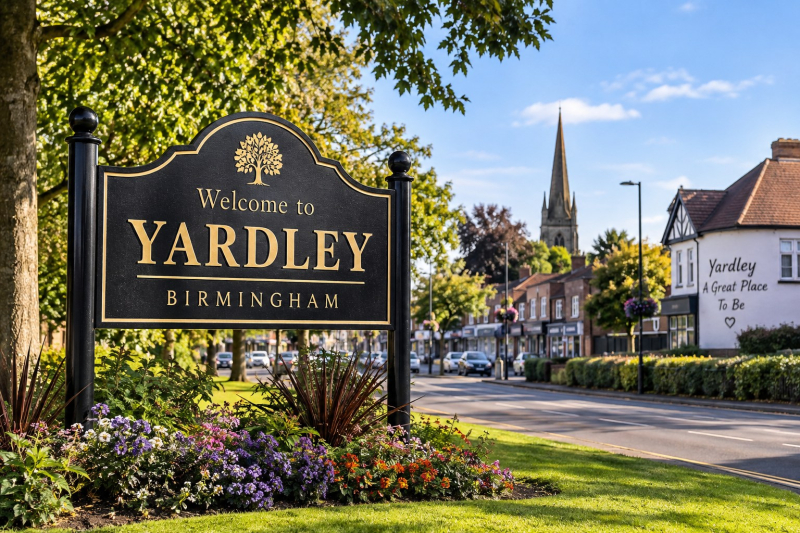
Average rents in the B25 postcode currently sit at around £1,089 per calendar month, up 0.3% over the past twelve months. That modest annual movement reflects a market that is stabilising after a period of sharper growth, rather than one that is softening in any meaningful way. Demand for well-presented homes in Yardley remains solid.
The breakdown by property type gives a more useful picture for landlords working out where to set their asking rent:
| Property type | Average monthly rent (Yardley West & Stechford) |
|---|---|
| Two-bedroom house | £1,046 pcm |
| Three-bedroom house | £1,259 pcm |
| Four-bedroom house | £1,750 pcm |
| One-bedroom flat | £840 pcm |
Source: local market data, September 2026.
Across Birmingham as a whole, average private rents reached £1,099 in August 2026, representing a 3.0% annual increase. The West Midlands region as a whole saw rents rise faster, at 4.9% year-on-year, which suggests Yardley’s relatively flat movement is partly a function of increased supply rather than weakened demand.
That supply point matters. Rental stock across Birmingham and Solihull is down roughly 10% compared with a year ago, and the average rental property is letting in around 32 days. Landlords who price realistically and present their properties well are still letting quickly. Those who overprice are sitting on void periods that quickly erode any theoretical gain from a higher headline rent.
One of the more significant pieces of local housing news involves the former Yardley Sewage Works site in Stechford, on Cole Hall Lane. Birmingham City Council, working with developer Morro Partnerships, housing association Midland Heart, Homes England and the West Midlands Combined Authority, has agreed to deliver nearly 300 affordable homes on the brownfield site, including 150 properties for social rent. The West Midlands Mayor has announced a £4.5m funding package from the Combined Authority to support the scheme, with construction expected to begin before the end of 2026.
New affordable housing at scale doesn’t directly compete with the private rented sector, but it does reflect the level of housing pressure across east Birmingham. There are currently 65,335 households on the West Midlands social housing waiting list, with more than 7,000 in temporary accommodation. Private landlords who offer well-managed, fairly priced homes are meeting a genuine need in this context, and tenants who can access the private rented sector are often actively choosing it for the flexibility and quality it offers.
An estimated 93,000 buy-to-let landlords exited the UK rental market in 2025, representing around 6% of all buy-to-let mortgage holders. The reasons are familiar: higher mortgage costs following the interest rate rises of recent years, changes to mortgage interest tax relief, increased compliance requirements, and uncertainty during the passage of the Renters’ Rights Act through Parliament.
For landlords who remain, the reduction in supply has a clear effect: less competition for good-quality properties. A well-managed home in Yardley, priced correctly and let to a properly referenced tenant, is as commercially sound a proposition now as it has been at any point in the last decade. The long-term picture supports that view: house prices in B25 have risen 66.5% over ten years, while rents in the same area have risen 54.8% over the same period.
The Renters’ Rights Act came into force on 1 May 2026 and changed the legal framework for private renting in England in several important ways. Landlords operating in Yardley need to be clear on the key obligations.
No-fault evictions are abolished. Section 21 notices no longer exist. If you need to recover possession of your property, you must rely on the grounds set out in the updated Section 8 procedure. Familiarise yourself with those grounds and keep your tenancy documentation in good order.
Fixed-term tenancies are gone. All new tenancies are now periodic from the outset. Existing fixed-term tenancies converted to periodic tenancies on 1 May 2026.
Rent increases are limited to once per year, with two months’ written notice required before any increase takes effect.
Advance rent is capped at one month. Landlords and agents can no longer request more than one month’s rent in advance before a tenancy begins.
The Information Sheet is a legal requirement. All named tenants must receive a copy of the government-produced Renters’ Rights Act Information Sheet 2026, either digitally or by post. The deadline for existing tenancies was 31 May 2026. Failure to comply can result in a fine of up to £7,000.
The NRLA has published detailed guidance on the Act and continues to update its resources as further provisions come into force. If you’re managing your own tenancy and haven’t yet reviewed your processes against the new rules, now is the time to do so.
For a fuller picture of how the Act has bedded in since May, Partridge Homes has covered the detail in a separate Renters’ Rights Act update.
Understanding what tenants prioritise helps landlords make better decisions about presentation, pricing and any improvements worth making before a property goes to market.
In Yardley, the housing stock is predominantly semi-detached and terraced, with 80% of homes having a garden and 59% including off-road parking. Both are consistently valued by tenants, particularly families with children. Connectivity is another strength of the area: the A45 gives direct road access to Birmingham city centre and the M42, while National Express West Midlands bus routes including the 11A, 11C, 17, 60, 73, X1 and X2 connect Yardley to the city centre, Solihull and Chelmsley Wood.
Tenants are also paying closer attention to energy efficiency than they were a few years ago. A property with a poor EPC rating means higher bills, and with energy costs still elevated, that matters to people deciding between two otherwise similar homes. If your property is rated D or below, it’s worth getting advice on what improvements would make a material difference, both to the rating and to the tenant’s running costs.
The single most common mistake landlords make when letting a property is pricing it against an online estimate rather than a proper local appraisal. Postcode-level averages are a starting point, not an answer. The right asking rent for a specific property on a specific street in Yardley depends on its size, condition, parking, garden, EPC rating, and what else is available to tenants at the same time.
An overpriced property sits empty. An empty property costs more in lost rent over two or three months than any uplift from a higher asking figure would have generated. Getting the rent right from day one, based on current comparable evidence, is the most straightforward way to protect your investment.
If you’re unsure what your Yardley property should be achieving in the current market, or you’re considering a switch from your current agent, the team at Partridge Homes has covered what to look for when changing letting agents in a guide worth reading before you make any decisions.
Whether you’re letting a property in Yardley for the first time or reviewing how your existing tenancy is being managed, Partridge Homes can arrange a no-obligation rental valuation and talk you through your options. You can reach us through our contact page or by calling the office directly. We’d rather give you an honest assessment of what your property is worth and what it needs than win instructions on the basis of an inflated figure.
Based on current market data for Yardley West and Stechford, the average monthly rent for a three-bedroom house is approximately £1,259 per calendar month. The figure for your specific property will depend on its condition, parking, garden, EPC rating and the level of competition at the time it goes to market.
Yes. The Renters’ Rights Act came into force on 1 May 2026 and applies to all private landlords in England, including those in Yardley. The key changes include the abolition of Section 21 no-fault evictions, the end of fixed-term tenancies, a cap on advance rent, and new rules around rent increases. Landlords who have not yet reviewed their tenancy processes against the new rules should do so as a priority.
Rental stock across Birmingham and Solihull is currently down around 10% compared with a year ago, and the average rental property is letting in approximately 32 days. Properties priced accurately and presented well are typically letting faster than that figure suggests.
In many cases, yes. Switching letting agents with an existing tenancy is straightforward when handled correctly. It involves reviewing your current management agreement, giving appropriate notice, and transferring tenancy documentation and deposit details to the new agent. Partridge Homes can walk you through the process before any commitment is made.
Private rented properties in England are currently required to have a minimum EPC rating of E to be legally let. The government has proposed raising this minimum to C, though the implementation date for existing tenancies has been subject to ongoing consultation. Landlords should check the current position on gov.uk and factor energy efficiency improvements into their longer-term planning.
Then get started with a FREE, accurate valuation today.
Then fill out the form & we’ll be in touch shortly


## Tired of Your Letting Agent Falling Short? If your Solihull letting agent is slow to respond, poor at handling...

## Frustrated With Your Letting Agent? Here's How to Leave Poor communication, late rent payments, hidden fees, and compliance failures...
# Is Your Letting Agent Still Working for You? The UK lettings industry is quietly transforming. Familiar, locally owned agencies...




"*" indicates required fields
"*" indicates required fields