Want To Let Or
Sell Your Property?
Then get started with a FREE, accurate valuation today.


Deciding when and how to prepare your home for sale is rarely straightforward. Spend too little and buyers notice; spend too much and you risk overcapitalising for your street. The good news is that most of the improvements that genuinely move the needle don’t require a full renovation. They require the right priorities.
Here are seven things that can make a measurable difference to what your home is worth, and what buyers will pay for it.
Buyers form an opinion before they’ve stepped through the door. With the vast majority of property searches starting online, your home’s exterior is doing a lot of work in photographs long before anyone books a viewing.
The improvements that deliver the most here tend to be the cheapest. A freshly painted front door, clean windows, pressure-washed paths and a tidy front garden cost very little but change how a property reads at a glance. If there’s a fence or gate, check it’s in good repair. If there are weeds in the driveway, clear them.
More substantial work, such as repointing brickwork or replacing tired cladding, costs more but can be worth it if the exterior is genuinely letting the property down. According to the Homeowners Alliance, well-maintained windows and a roof that appears to be in good condition are among the most important features for strong kerb appeal. Research suggests homes with well-kept exteriors can sell for around 7% more than otherwise comparable properties nearby.
Kitchens sell houses. It’s a well-worn phrase, but it holds up. The kitchen is the room buyers scrutinise most carefully, and it’s the one most likely to prompt either an offer or a hesitation.
You don’t need to gut it. A minor, focused refresh, replacing cabinet doors, updating worktops, fitting new handles, adding a splashback, often delivers a better return than a full remodel. The 2024 Cost vs. Value Report found that smaller kitchen updates recouped close to 96% of their cost at resale, while major upscale remodels returned closer to 38%. The lesson: targeted improvements on an existing layout tend to outperform wholesale replacement.
If you are replacing worktops, quartz and granite surfaces hold up well with buyers and remain a popular choice in 2025 and into 2026. Energy-efficient appliances, good lighting, and a clean, uncluttered layout round out what most buyers are looking for.
After the kitchen, bathrooms are where buyers look hardest. An outdated or poorly maintained bathroom can be enough to push someone towards a different property, especially when comparable options are available.
A full bathroom renovation typically recoups around 60–80% of its cost in added value, according to the 2025 Cost vs. Value Report. But again, a full refit isn’t always necessary. Re-grouting tiles, replacing a dated vanity unit, fitting a new mirror, and updating taps and accessories can transform how a bathroom feels for a fraction of the cost.
Where budget allows, buyers in 2025 are increasingly drawn to features like LED mirrors, walk-in showers, and low-maintenance surfaces. Quartz has overtaken granite as the most popular vanity top material, chosen by around 39% of homeowners, largely because it’s non-porous and easy to keep clean (Houzz, 2025). If your bathroom is functional but dated, even modest cosmetic updates are worth making before going to market.
This one has shifted from “nice to have” to something buyers actively factor into their offers. Running costs matter, and an energy-efficient home is a genuinely easier sell.
Research from Freddie Mac found that energy-efficient homes sell for between 2.7% and 8% more than comparable properties without those features. In the UK context, your EPC rating is the clearest signal to buyers of where a property sits on that scale. Improving your rating from a D to a C, for example, can be achieved through relatively accessible measures: loft insulation, cavity wall insulation, a modern boiler, or double-glazed windows where they’re missing.
Heat pumps and solar panels represent a larger outlay but add meaningful value in the right property. Solar panels are associated with a price premium of around 4–6% in UK markets, and buyers who are already thinking about running costs tend to view them as a genuine asset rather than a novelty.
If you’re unsure what your current EPC rating is or what improvements would move it, gov.uk holds the public register of EPC certificates and outlines the measures that qualify for government-backed schemes.
Adding usable floor space is one of the most reliable ways to increase a property’s market value, provided the numbers stack up for your street.
Nationwide research from 2025 found that adding a bedroom through an extension or loft conversion can increase a property’s value by up to 24%. A well-executed extension more broadly tends to add 10–20% to value, with double-storey extensions at the higher end of that range. Loft conversions that create a proper bedroom with a window and adequate headroom tend to perform particularly well.
The important caveat: extensions only make financial sense if you’re not already at the ceiling price for your road. If comparable properties with the same number of bedrooms are selling at a similar level, you may spend more than you recover. It’s worth getting a valuation first to understand where your home sits relative to the local market before committing to a significant build.
Planning permission requirements vary depending on the size and type of work. Many single-storey rear extensions fall within permitted development rights, but it’s always worth confirming with your local planning authority before starting.
Buyers notice what you’ve let slip. A crack in the ceiling, a stiff door, a dripping tap, damp patches on a wall: individually, these might seem minor. Collectively, they create an impression of a property that hasn’t been looked after, and that impression costs money.
Deferred maintenance is one of the most common reasons buyers reduce their offers or pull out after a survey. The survey will find problems you haven’t fixed, and a buyer who has just paid for a survey is in a different mindset to one who walked in and loved the house. Fixing obvious issues before going to market removes ammunition from the negotiating table.
Work through the property methodically: roof and gutters, windows and doors, boiler servicing, electrics (if they haven’t been checked recently), any signs of damp. None of this is glamorous, but a property that surveys cleanly is worth more in practice than one that surveys badly, regardless of how it looked on the day of the viewing.
This one has been transformed by the way people work. Since 2020, a usable home office has moved from a bonus to a genuine buying criterion for a significant proportion of buyers, particularly in areas like Birmingham and Solihull where many residents commute into the city only part of the week.
You don’t need a dedicated room to address this. A well-presented, clearly defined workspace, whether that’s a spare bedroom set up as a study, a garden office, or a thoughtfully arranged corner in a larger room, signals to buyers that the property works for modern life.
If you have a spare bedroom currently used for storage, consider clearing and staging it as a home office before viewings. A desk, a chair, decent lighting, and tidy shelving are enough. Garden offices have become increasingly popular and, where space allows, can add meaningful value: a well-built, insulated garden room with power and connectivity is a genuine asset to buyers who work from home regularly.
The key is showing buyers the possibility. Most can’t visualise a room’s potential from a pile of boxes; they can visualise it from a room that’s already doing the job.
Not every improvement is worth making before every sale, and the right priorities depend on your property, your street, and what the local market is responding to right now. If you’re weighing up where to spend before listing, the team at Partridge Homes can walk you through what’s likely to make the most difference for your specific home. Book a free valuation and we’ll give you an honest view of where your property stands and what, if anything, is worth doing before you go to market.
A loft conversion that creates a usable bedroom with adequate headroom and natural light typically adds meaningful value, with research suggesting an uplift of up to 24% in some cases. However, if your property is already at or near the ceiling price for your street, the return may not cover the build cost, so it's worth getting a local valuation first.
It depends on the scale of the work. Smaller, targeted kitchen updates, such as new doors, worktops, and lighting, tend to recoup a higher proportion of their cost than full high-end remodels. Research from the 2024 Cost vs. Value Report found that minor kitchen refreshes can recoup close to 96% of their cost at resale.
Yes, in most cases. Research suggests energy-efficient homes sell for 2.7% to 8% more than comparable properties with lower ratings. Buyers are increasingly factoring running costs into their decisions, and a higher EPC rating, particularly moving from a D to a C, can make a property noticeably more attractive.
Almost always, yes. A property that surveys cleanly gives buyers less reason to reduce their offer or pull out after the survey stage. Fixing obvious defects before going to market, things like leaks, damp, or a faulty boiler, removes the most common triggers for post-survey renegotiation.
Many single-storey rear extensions fall within permitted development rights and don't require a full planning application, but the rules depend on the size, position, and type of property. It's always worth checking with your local planning authority before starting any build work.
Then get started with a FREE, accurate valuation today.
Then fill out the form & we’ll be in touch shortly

# Your Driveway Could Be Worth More Than You Think Most sellers obsess over kitchens and bathrooms whilst ignoring the...
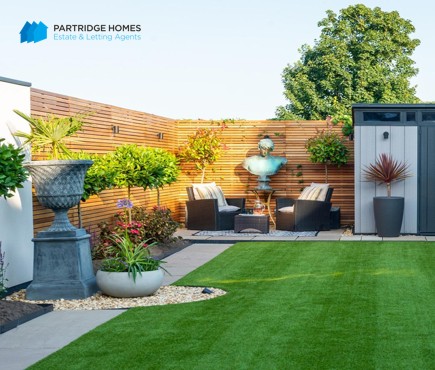
## Your Garden Could Be Costing You Thousands Most sellers obsess over kitchens and bathrooms whilst completely overlooking the first...

Buying a home is one of the biggest financial commitments you will ever make — yet home insurance is often...





"*" indicates required fields
"*" indicates required fields