Want To Let Or
Sell Your Property?
Then get started with a FREE, accurate valuation today.


As a leading Estate Agents in Solihull we wanted to bring our readers the latest OnTheMarket Property Sentiment Index (PSI) for Q2 2026, released on 13th July 2026, offers one of the clearest snapshots yet of how buyers, sellers and renters are thinking and behaving across the UK. Drawing on responses from almost 6,750 consumers and active movers — including a YouGov survey of the general public and a separate survey of active OnTheMarket users — the report points to a market that is cautious, measured, and increasingly well-calibrated.
For anyone considering a move in Birmingham or Solihull, the findings make for genuinely useful reading.

Perhaps the most significant shift in the data is in how people now expect house prices to behave. Just 31% of respondents anticipate price increases over the next year — down from 41% in March 2026 and 51% in September 2025. That is a clear and consistent downward trend in price optimism.
At the same time, more people now expect prices to hold steady. 30% of respondents anticipate values will remain broadly unchanged (up from 26% in the previous quarter), while only 20% expect prices to fall.
This is not a sign of a market in trouble. Quite the opposite. When sellers and buyers share broadly similar expectations about value, transactions are far more likely to proceed smoothly. One of the most persistent causes of stalled sales has historically been sellers holding out for figures that buyers simply cannot — or will not — meet. A reset in expectations on both sides removes that friction.
For sellers in Birmingham and Solihull, this means that accurate, realistic pricing from the outset is more important than ever. Overpriced listings are increasingly likely to sit unsold. Homes priced to reflect current conditions are far more likely to attract genuine interest quickly. You can read more about when to sell and how to approach pricing here.
Despite ongoing economic uncertainty — including geopolitical pressures, inflation fluctuations and interest rate movements — affordability confidence among active buyers remains strong. 66% of active buyers say they feel confident about affordability, broadly in line with the 69% recorded in March 2026.
Notably, 34% of consumers expect interest rates to rise (down from 36% in the previous quarter), yet this has not significantly dented buyer confidence. This suggests that the market has largely absorbed the reality of higher borrowing costs and that buyers are adapting their expectations and budgets accordingly.
The broader picture from the UK House Price Index reinforces this. House prices increased by 3.8% in the year to April 2026, and on a seasonally adjusted basis, rose by 0.6% between March and April 2026. Growth was fastest in the North East, Northern Ireland and the North West. The Nationwide Index places annual house price growth at +2.2% to the end of June 2026 — steady rather than spectacular, but consistent.
Modest, sustainable growth of this kind is healthier for the long-term market than the sharp peaks seen in previous years. It supports affordability, reduces the risk of negative equity, and gives buyers and sellers greater confidence when planning ahead.
One of the more encouraging findings in the report concerns timelines. 67% of sellers expect to complete a sale within six months, and the same proportion of buyers share that expectation.
That alignment is significant. When both sides of a transaction have a similar sense of how long the process will take, it reduces the likelihood of frustration, renegotiation, or deals falling through.
Supporting data from the wider market shows the average time to exchange in 2026 stands at 130 days — five days longer than the previous year. That is a modest increase, and in the context of a market with more supply and more measured buyer behaviour, it is not unexpected.
Supply of newly listed properties is 2.7% higher year to date in 2026 compared with 2025, giving buyers more to choose from. Alongside this, 38.4% of listings have seen at least one price reduction so far this year — a reflection of sellers adjusting to meet the market rather than waiting indefinitely for higher offers.
For buyers, this represents a reasonable window of opportunity: more choice, less competition, and sellers who are generally more willing to negotiate than they were 12 to 18 months ago. For sellers, it underlines the value of pricing correctly from the start rather than reducing later. You can see how the Birmingham property market is performing in more detail here.
The rental market has undergone significant change following the introduction of the Renters’ Rights Act (RRA), which received Royal Assent on 27th October 2025 and entered Phase 1 on 1st May 2026.
The Act represents the most substantial reform of the private rented sector in a generation. Key changes include:
Awareness of the Act among tenants has grown rapidly. In October 2025, just 19% of tenants said they were aware of the legislation. By the time Phase 1 went live in May 2026, that figure had risen to 60% — a meaningful shift that is already influencing how renters approach the market.
The result is a notable increase in renter confidence. 88% of renters now expect to find a property and have possession of the keys within six months, reflecting a stronger belief in their ability to fulfil their moving plans.
For landlords, the landscape has changed considerably. Understanding your obligations under the new legislation is essential. We have covered the RRA in detail in our article on the Renters’ Rights Act six weeks in, and if you have questions about how eviction processes now work, our guide on how to evict a tenant in 2026 is a good starting point.
Taken together, the data from the Q2 2026 PSI points to a market that is finely balanced rather than falling. Mortgage rates have eased from their spring peak. Sellers are adjusting asking prices to meet buyers. Buyers are engaged and, in the majority, confident about what they can afford. Renters are better informed and more optimistic about their prospects.
Here is a quick summary of the key figures:
| Indicator | Finding |
|---|---|
| Expecting house price increases | 31% (down from 41% in March 2026) |
| Expecting prices to remain stable | 30% (up from 26%) |
| Active buyers confident on affordability | 66% |
| Sellers expecting to complete within 6 months | 67% |
| Buyers expecting to complete within 6 months | 67% |
| Renters expecting keys within 6 months | 88% |
| Annual UK house price growth (to April 2026) | 3.8% |
| Listings with at least one price reduction | 38.4% |
| New supply year-on-year increase | 2.7% |
The overall picture is one of a market that has recalibrated. The froth has gone, and in its place is something more durable: realistic pricing, steady demand, and a clearer sense of what properties are genuinely worth.
Whilst the national data provides a useful backdrop, property markets are always local in character. Birmingham and Solihull continue to attract strong interest from both owner-occupiers and investors, supported by the area’s employment base, transport links, and the variety of housing stock available across its neighbourhoods.

If you are thinking about buying, selling, or letting in the area, the national trends described above provide useful context — but the specifics of your street, your property type, and the current local supply of comparable homes will ultimately shape the outcome of your move.
Whether you are buying, selling, or letting in Birmingham or Solihull, the team at Partridge Homes can give you an honest, up-to-date view of what the market looks like right now. Get in touch with us today to find out how we can help you move with confidence.
Then get started with a FREE, accurate valuation today.
Then fill out the form & we’ll be in touch shortly


Rent arrears have always been an occupational hazard for landlords — but the abolition of Section 21 has fundamentally changed...

Thinking about selling your Solihull home? The latest market data reveals a more complex picture than any single headline figure...
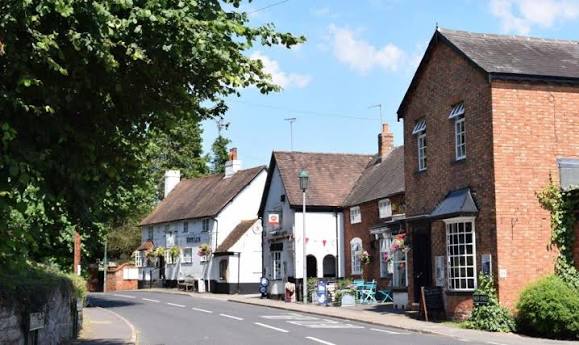
# Hampton-in-Arden's Rental Market Is Booming — Here's What Landlords Need to Know Demand is outstripping supply in Hampton-in-Arden, void...


"*" indicates required fields
"*" indicates required fields